
Youper Review: 2026 Overview
The verdict
4.0/ 5 An AI-powered emotional health assistant that runs CBT and ACT techniques through conversational chat.
Youper does one thing well: it listens, asks the right follow-up, then walks you through a technique. The AI chat feels less clinical than a worksheet and less gimmicky than some rivals. At around $69.99 a year (at the time of writing — confirm in the app store), it sits close to Headspace and Calm in price despite a narrower scope. If emotional processing is what you need, it earns its place; if you also want meditations or a habit builder, you will quickly feel its edges.
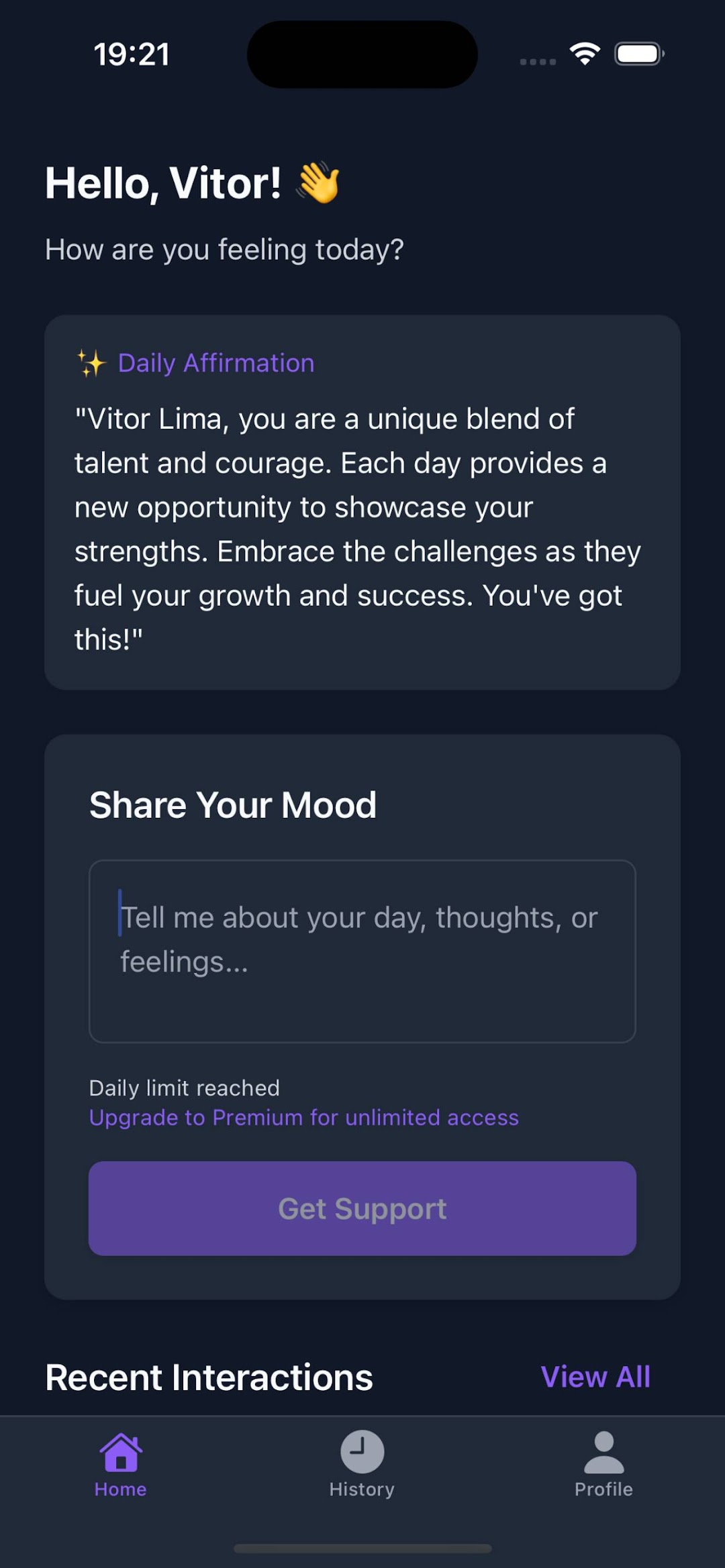
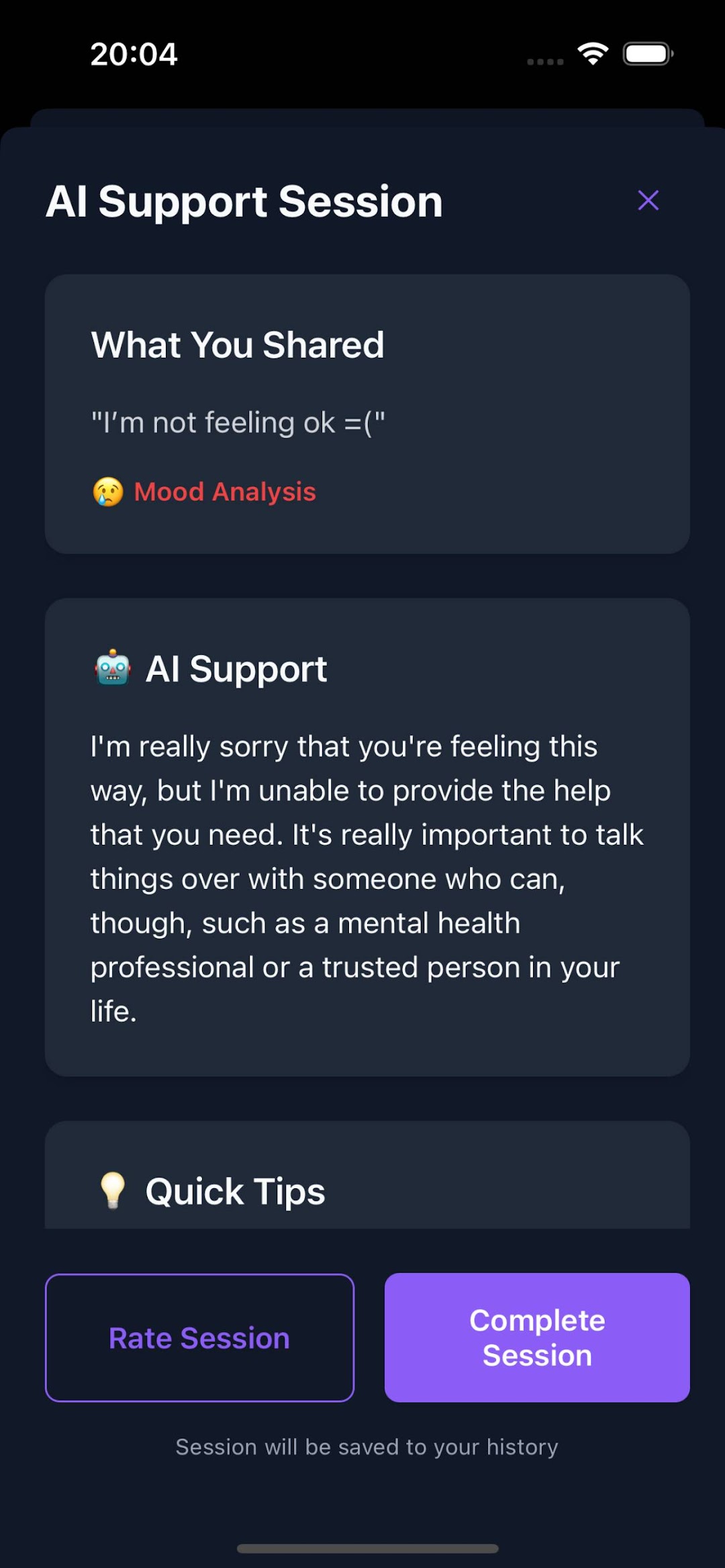
Rather than handing you a mood wheel and leaving you to it, Youper's AI asks what is on your mind, listens, then introduces a technique — a cognitive reframe, an acceptance exercise — that follows from what you said. Most conversations run five to ten minutes. You close the app having done something rather than just recorded something.
Emotional check-ins tend to get skipped when they feel like homework; Youper's chat format lowers the friction enough that you might actually open it at the end of a difficult day. The question, at a subscription price that rivals Headspace and Calm, is whether a single loop sustains value past the first fortnight.
What Youper actually is
Youper is an AI emotional-health assistant on iOS and Android. Its core is a chat interface: you describe how you are feeling, the AI responds with questions drawn from CBT and ACT, and over a few exchanges it guides you toward a relevant technique. Think of it less as a chatbot and more as a structured reflection tool that happens to use natural language.
Youper also offers mood tracking, journaling, standardised-style assessments, and a modest course and meditation library. Those features exist, but the chat is where it puts its weight.
Who it suits — and who it doesn't
Youper suits someone who has tried blank-page journaling and found it going nowhere, or who wants a structured technique without booking a session. The conversational format fits people who think by talking things out; the short sessions fit people with patchy schedules.
It is less suited to someone who wants meditation and sleep content — that is close to absent. There is no habit builder. And the AI is not a therapist: it does not provide clinical care and should not be treated as one.
First run and setup
A short onboarding questionnaire has you indicate your main concerns and the app calibrates accordingly. It is quicker than Liven's quiz-to-plan flow but also less ambitious — Youper is tuning prompts, not building a multi-week programme. Time-to-first-value is 4 out of 5: you do something meaningful within minutes, though the real usefulness accumulates across repeated sessions.
The AI conversation in practice
The conversation engine is Youper's most credible feature. It adjusts follow-up questions based on your input rather than cycling through a fixed script. The techniques that emerge — thought records, cognitive reframing, defusion exercises from ACT, brief body scans — arrive embedded in the conversation, not handed over as a separate worksheet.
After several check-ins you may notice the scaffolding; responses are competent rather than creative. The AI does not carry strong memory across sessions. For a daily emotional-processing tool those limits are manageable, but people expecting a more expansive experience will feel the ceiling.
Mood tracking, assessments, and the course library
The mood tracker logs emotion and intensity per session; over time the app surfaces pattern observations. Structured assessments resembling standardised psychological measures give a periodic concrete baseline — both are clearly self-checks, not diagnoses.
The course library covers anxiety, sleep and self-esteem. It is modest compared to Headspace or Liven, meditations are limited, and soundscapes are absent. Journaling is a light writing space alongside chat rather than a full-featured tool.
Method and credibility
Youper names its methods — CBT, ACT and mindfulness — and the chat techniques are recognisably derived from those frameworks. That is more than many wellness apps manage. Our method score is 4.1 out of 5. A self-guided AI is not supervised CBT, and the app does not claim otherwise — use it as an adjunct or a first step, not a clinical substitute.
Pricing and what you actually get
Youper has a limited no-cost tier and a Premium subscription at around $69.99 per year at the time of writing — confirm current pricing in the App Store or Google Play. A free trial is available. Full AI access and the content library sit behind the paid tier.
That price sits close to Headspace and Calm, both of which cover more ground: meditation, sleep, soundscapes, habit tools. Youper's case rests on the quality of its core loop. If the chat format clicks, the price is defensible; if you want breadth, you may feel underserved.
How it compares to Wysa and Liven
Wysa is the most direct competitor: AI chat rooted in CBT, similar price, mood tracking and assessments. Wysa carries a slightly stronger clinical narrative and adds optional human coaching. Youper's conversation feels a bit more natural; Wysa's feels more like worksheets. We rate Wysa fractionally higher (4.1 versus 4.0) — but the gap is narrow enough that trialling both makes sense.
Against Liven the gap is structural. Liven (4.5) offers mood, journaling, courses, meditations, soundscapes, a habit builder, and an AI companion within a longer-arc programme. Youper's conversational AI is more focused on emotional processing, but sustained use requires more to return to. Youper's stickiness score of 3 out of 5 reflects this: once the conversation format stops being novel, the absence of a habit layer or audio content can thin out daily use.
Privacy and data
Youper handles emotional disclosures, mood histories, and responses to what are effectively mental-health assessments. The app includes crisis resources — an important baseline. Check the current privacy policy on the Youper website before committing, paying attention to data sharing and retention. Policies can change, and emotional-health data is among the most personal a company can hold.
Verdict
Youper does its central thing well. The AI chat is thoughtful, the methods are named and real, and the short-session format lowers enough friction to make daily use plausible. Our score of 4.0 out of 5 reflects genuine strengths against a pricing tension and a relatively thin feature set around the core.
Take the free trial, use it for two weeks, and notice whether the conversation format fits the way you process things. If it does, Premium is justifiable. If you want guided audio or a habit layer, look at Wysa as a near equivalent or Liven for a broader toolkit.
Maker: Youper, Inc. · Platforms: iOS, Android · Approach: Self-guided AI · Methods: CBT, ACT, mindfulness
Youper plans & pricing
Free tier: Limited free; subscription for full use.
Trial: Free trial offered.
Prices approximate, as of June 2026 — verify on the App Store / Google Play. Unlimited AI sessions and full content need a subscription.
Cancellation: Cancel through your app-store subscription; check the renewal date.
Feature checklist
- Mood trackingYes
- JournalingYes
- AI companionYes
- Courses & lessonsYes
- MeditationsYes
- Soundscapes / focus music—
- Habit & routine builder—
- RemindersYes
- Quiz / assessmentYes
- Community—
- Live coaching—
- Crisis resourcesYes
- Data export—
- Apple Health / Google Fit—
- Home-screen widgetsYes
- Offline usePartial
Youper pros & cons
What's good
- AI chat adapts follow-up questions to what you say rather than cycling a fixed script
- Names its methods — CBT, ACT, mindfulness — rather than vague wellness language
- Mood tracking integrates with conversation so the app can flag patterns, not just log numbers
- Structured assessments give a concrete starting point rather than a blank screen
- Short five-to-ten-minute sessions suit commutes or busy evenings
What to weigh up
- No soundscapes and limited meditations — calming audio is essentially absent
- No habit builder, so intentions have nowhere to land after the chat ends
- No data export and no Apple Health or Google Fit sync
- Priced close to Headspace and Calm (around $69.99/year at time of writing) for a narrower scope — confirm current pricing in the App Store or Google Play
Support
Support is primarily via email; channels are not prominently listed in-app. Crisis resources are built into the interface — a meaningful baseline for a tool in this space.
Method & credibility
Youper names CBT and ACT specifically rather than hiding behind generic 'evidence-based' language. The methods are real; how faithfully a self-guided AI app replicates clinical delivery is, as always, a separate question.
Privacy & data
Youper handles mood data and personal disclosures — review the current privacy policy on their website before committing. Emotional-health data is among the most sensitive a company can hold, and policies can change.
Third-party ratings
- 4.7 / 5 on App Store — as of June 2026, verify
- 4.6 / 5 on Google Play — as of June 2026, verify
We report independent ratings with their source and date and never invent them. Figures here are approximate and pending verification before launch.
Our data: Youper
Two numbers we measure ourselves, on the same 1–5 scale for every app — the things most roundups never score (see all 20 on the compare page):
Youper FAQ
Is Youper free to use?
Youper has a limited no-cost tier and a free trial. Full access requires a subscription — around $69.99 per year at the time of writing. Confirm current pricing in the App Store or Google Play.
Is Youper available on Android?
Yes, Youper is available on both iOS and Android.
Can Youper replace therapy?
No. It is a self-guided tool using CBT and ACT techniques, not a clinical service. Use it as a daily practice or a complement to professional support, not instead of it.
How does Youper compare to Wysa?
Both are CBT-rooted AI chat apps with assessments and mood tracking. Wysa has a stronger clinical narrative and optional human coaching. We rate Wysa marginally higher (4.1 vs 4.0) — both are worth trialling.
Can I export my mood data from Youper?
No data export at the time of writing. Worth factoring in if you want to share mood history with a therapist.
Does Youper sync with Apple Health or Google Fit?
No — at the time of writing Youper does not sync with either.