
Stoic Review: 2026 Overview
The verdict
3.8/ 5 A focused journaling and mood app that puts Stoic philosophy at the centre of your daily reflection practice.
Stoic is a tidy, well-designed app that does one thing thoughtfully: it frames your daily reflection through a Stoic lens. If that is what you are after, it delivers quickly. It will not suit you if you want an all-in-one plan, habit tracking, or an AI companion — but for the focused journaler, it earns its place on the home screen.
Stoic takes a deliberate bet: rather than packing in features, it wraps your daily journaling in the vocabulary and exercises of Stoic philosophy. You get morning reflection, an evening review, mood logging and some wisdom content — and that is roughly it. The bet pays off if you want a clear framework for self-reflection rather than a blank page or a gamified nudge.
Built by Maciej Lobodzinski, the app has accumulated a loyal following, particularly on iOS where it sits at around 4.7 in the App Store at the time of writing. It will not compete with broader platforms on raw feature count. What it does instead is create a daily ritual with a recognisable shape — and for a certain type of user, that consistency is worth more than a sprawling feature set that never quite gets used.

What Stoic actually is
The app is built around the idea that Stoicism offers practical daily tools, not just ancient quotes. Marcus Aurelius wrote his Meditations as a personal journal; Epictetus distinguished what is and is not in our control. Stoic translates those ideas into a structured morning check-in and an evening review — two anchors to your day rather than an open-ended feed.
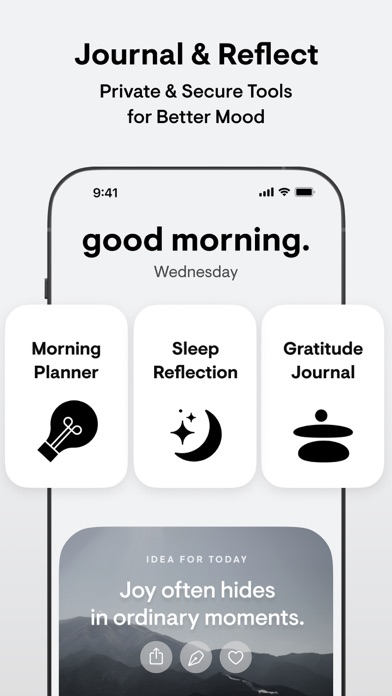
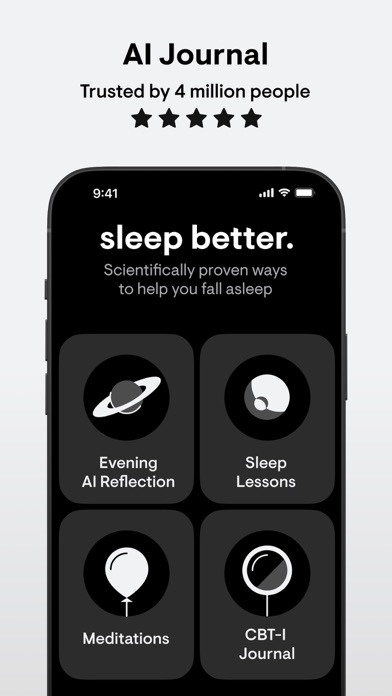
Alongside journaling, there is a mood tracker, some basic breathing exercises, soundscapes for focus or calm, and a wisdom library of Stoic readings. It is a focused stack. The app runs on iOS and Android, with partial offline support.
Setup and first run
Getting started is fast. There is no lengthy onboarding quiz, no multi-screen value proposition — you pick a few preferences and land in the journal fairly quickly. Our time-to-first-value score is 3 out of 5: quicker than many, but the limited free tier means you will hit a paywall before you have tested the core prompts properly.
The trial converts to a paid subscription, so check the renewal date before you start. Premium runs at around $49.99 per year as of June 2026 — confirm current pricing in the App Store or Google Play. If the trial converts quietly, that can come as a surprise.
The morning and evening reflection templates
The centrepiece of the app is the two-part daily ritual. The morning session typically asks you to set an intention, consider what might go wrong today, and identify what is in your control. This maps directly onto classical Stoic practice — the premeditatio malorum exercise — rather than a loosely philosophical prompt dressed up with a Marcus Aurelius quote.
The evening review asks how the day went against those intentions. Did you act according to your values? What would you do differently? It is a simple loop, but it has a clear logic. After a few weeks you can read your entries as a quiet conversation with yourself, and that is genuinely useful in a way a blank journal rarely is.
Mood tracking: integrated, not bolted on
Mood logging in Stoic is tied to the journal sessions rather than being a separate tap-and-go screen. You rate how you feel, and that rating sits alongside the entry that prompted it. Over time, the app surfaces a mood history so you can spot correlations between your reflections and your emotional state.
It is a thoughtful integration. The downside is that it depends on you completing a journal entry to generate useful data. If you want mood tracking as a standalone 30-second habit, something like Daylio will serve you much better — its whole design is built for quick logging.
Wisdom content and breathing exercises
Beyond the journaling, Stoic includes a library of Stoic readings and quotations — Marcus Aurelius, Epictetus, Seneca — curated so you get a short passage rather than a full text dump. This sits closer to daily reading than a structured course, but it reinforces the philosophical framing without requiring you to already know the material.
The breathing exercises are basic: a few guided patterns for focus or calm. The soundscapes are functional — background audio for a journaling session, not a rival to Calm's sleep library. These features feel like sensible additions rather than core differentiators.
Day-to-day feel after week two
Our stickiness score is 3 out of 5. That reflects something real: the app creates a clear ritual, but rituals are fragile, and Stoic does relatively little to pull you back after a missed day. There are reminders and you can set them to suit your morning, but there is no social layer, no streak mechanic that bites if you skip, and no adaptive coaching to keep the prompts fresh.
Users who already have a journaling habit tend to stick with Stoic. Users who are building the habit from scratch find it easier to drift. The morning-and-evening structure helps, but it relies on you to care about the framework — the app is not going to chase you.
Method and credibility
Stoic makes no clinical claims. The philosophy behind it — Stoicism — is a well-documented tradition with a long history of practical application, and journaling as a reflection practice has reasonable support in wellbeing research. But the app is not drawing on CBT, DBT or any formal therapeutic methodology.
That is a clarification, not a criticism. If you want a framework backed by named clinical modalities, look elsewhere. If you want a structured philosophical practice for daily reflection, Stoic's evidence base is exactly what you would expect: ancient, durable and not peer-reviewed.
Pricing and what you actually get
The no-cost tier is limited — you get a taste of the prompts but will hit a ceiling before long. Premium unlocks the full journal experience, prompts, insights and most of the content. Pricing at the time of writing sits at around $49.99 per year, with a trial that converts to the subscription. Always confirm current pricing in the App Store or Google Play before subscribing.
That price sits in the middle of the market. For comparison, Daylio's Premium runs around $23.99 per year and covers mood tracking and micro-journaling very well. Stoic costs roughly twice as much for a more opinionated, narrower tool. Whether the Stoic framing is worth the premium is a personal call.
How Stoic compares to rivals
Against Daylio, Stoic is slower to start (our time-to-value is 3 versus Daylio's 5) and costs more, but offers richer guided prompts and a philosophical structure that Daylio simply does not attempt. Daylio wins on speed and price; Stoic wins on depth of reflection.
Against Liven — our current top pick — the comparison is less favourable for Stoic. Liven brings mood tracking, journaling, courses, habit tools and an AI companion into a single guided plan rooted in CBT, ACT and other named frameworks. It does more and adapts to you more actively. Stoic's advantage is focus: if you specifically want Stoic philosophy rather than a broad self-development platform, Stoic is the sharper tool. If you are undecided about your approach, Liven's breadth is more useful.
Against Reflectly and Rosebud — both AI-prompted journaling apps — Stoic holds its own on structure but lacks the AI follow-up that can make those apps feel like genuine conversations. If intelligent, adaptive prompts matter, Rosebud is worth a look alongside Stoic.
Privacy and data
Stoic is a small, indie-developed app. Your journal entries are personal data, and it is worth checking the current privacy policy — either in the App Store listing or on the developer's website — before you commit to writing honestly in it. We have no specific concerns to report, but privacy policies change, and a solo developer operates under different commercial pressures than a venture-backed company.
The app offers data export, which is a meaningful point in its favour. Your entries are not locked into the platform, and you can keep a local copy of your writing regardless of what happens to the app or your subscription.
Who should and should not get Stoic
Stoic suits you if you already have an interest in Stoic philosophy, or if you want a clear framework for morning-and-evening reflection and do not need habit tracking, structured courses or an AI layer. It is a good fit for people who have tried blank journaling and found it drifts — the templates give it structure.
It is less suited to beginners who need broader guidance, or to anyone expecting an all-in-one wellbeing platform. If you are looking for something that survives past the first fortnight without an existing motivation to journal, the stickiness numbers suggest you will need to supply your own momentum. And if you are on Android, the lower Play Store rating (around 4.2 versus 4.7 on iOS) is worth factoring in before you commit.
Maker: Maciej Lobodzinski · Platforms: iOS, Android · Approach: Self-guided · Methods: journaling, stoicism, reflection
Stoic plans & pricing
Free tier: Limited free; Premium unlocks the full experience.
Trial: Free trial that converts to a subscription.
Prices approximate, as of June 2026 — verify on the App Store / Google Play. Most prompts, exercises and insights require Premium.
Cancellation: Cancel through your app-store subscription; check the renewal date after the trial.
Feature checklist
- Mood trackingYes
- JournalingYes
- AI companion—
- Courses & lessonsWisdom content
- MeditationsBreathing
- Soundscapes / focus musicYes
- Habit & routine builder—
- RemindersYes
- Quiz / assessment—
- Community—
- Live coaching—
- Crisis resources—
- Data exportYes
- Apple Health / Google FitYes
- Home-screen widgetsYes
- Offline usePartial
Stoic pros & cons
What's good
- Clear Stoic framing gives your journaling a coherent through-line rather than scattered prompts
- Morning and evening reflection templates feel purposeful, not generic
- Clean, uncluttered interface that stays out of the way
- Mood tracking integrates naturally with journal entries rather than sitting as a separate silo
- Soundscapes and basic breathing exercises extend beyond pure text
- Data export available, so your entries are not locked in
What to weigh up
- No habit builder, structured courses or guided program — this is firmly a journaling tool
- No AI companion or adaptive coaching of any kind
- App Store rating (about 4.7) is noticeably higher than Google Play (about 4.2) — Android users report a rougher experience
- Premium at around $49.99 per year feels steep relative to the narrow feature set
- No crisis resources — not suitable as a sole wellbeing tool for anyone in distress
Support
Support is typically provided by email or via the developer's website. Documentation may be available, but at the time of writing we could not verify live-chat or in-app support options — check the app or developer site for current details.
Method & credibility
Stoic draws on recognisable classical philosophy — specifically Stoicism, associated with Marcus Aurelius, Epictetus and Seneca — rather than a clinical or academic framework. There are no named therapeutic modalities such as CBT or DBT in the approach. Journaling and reflection have some support in wellbeing research, but the app itself does not make clinical claims.
Privacy & data
Stoic is a solo-developer product, so the data footprint is likely smaller than a venture-backed app, but the same caution applies: check the current privacy policy on the developer's site or the App Store / Google Play listing before you commit personal journal entries to the app.
Third-party ratings
- 4.7 / 5 on App Store — as of June 2026, verify
- 4.2 / 5 on Google Play — as of June 2026, verify
We report independent ratings with their source and date and never invent them. Figures here are approximate and pending verification before launch.
Our data: Stoic
Two numbers we measure ourselves, on the same 1–5 scale for every app — the things most roundups never score (see all 20 on the compare page):
Stoic FAQ
Is Stoic based on clinical methods like CBT?
No. Stoic draws on classical Stoic philosophy — journaling practices associated with Marcus Aurelius, Epictetus and Seneca — rather than clinical frameworks. Journaling in general has some support in wellbeing research, but Stoic does not claim a clinical evidence base. It is a philosophical tool, not a therapeutic one.
What does the no-cost version of Stoic include?
The free tier gives you a limited preview of the app's features. Most prompts, exercises and insights are gated behind Premium. As of June 2026, Premium is around $49.99 per year with a trial that converts — check current pricing in the App Store or Google Play.
How does Stoic compare to Daylio for mood tracking?
Daylio is faster and cheaper for pure mood tracking — it is purpose-built for quick tap-to-log entries. Stoic's mood tracking is integrated with journaling rather than standalone, so it requires more time per session but produces richer, contextualised data. If quick logging matters most, Daylio wins; if you want reflection tied to your mood records, Stoic is the better fit.
Does Stoic work offline?
The app has partial offline support. Core journaling functions should work without a connection, but some content may require one. Check the current App Store or Google Play listing for specifics, as offline capabilities can change between updates.
Can I export my journal entries from Stoic?
Yes. Data export is available, which means your entries are not locked into the app. This is a genuine plus for a journaling tool — you can keep a local copy of your writing regardless of what happens to the app or your subscription.
Why is the Stoic rating lower on Google Play than the App Store?
At the time of writing, Stoic sits at around 4.7 on the App Store and around 4.2 on Google Play. Android users have historically reported a rougher experience. If you are on Android, it is worth reading recent Play Store reviews before subscribing.