
Habitica Review: 2026 Overview
The verdict
3.8/ 5 A habit tracker that rewires your to-do list as a role-playing game, complete with quests, gear, and a party of real people.
Habitica does something most habit apps avoid: it gives you a concrete, slightly silly reason to care whether you did your morning run. The RPG wrapper is either exactly right for you or a complete non-starter. If you are motivated by numbers going up and an avatar getting stronger, this will outlast nearly anything else you try. If that sounds exhausting, look elsewhere.
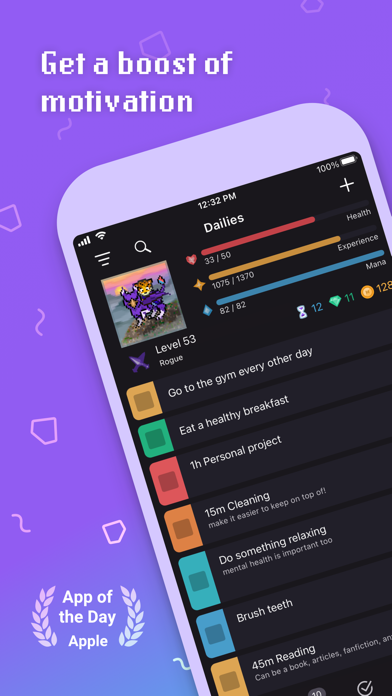
Habitica is the habit tracker for people who have already tried every other habit tracker. Your real-world tasks map onto RPG mechanics: complete a daily and your character gains experience; miss it and she loses health. Let enough slip and your whole party takes damage — the kind of consequence that makes you get out of bed.
This is not a wellness app. There is no mood log, no meditation library, no AI coach. Habitica does one thing — help you build habits through game pressure — and it does it with a conviction that most apps lack. Whether that focus is an asset or a dealbreaker depends on what you need.
What Habitica actually is
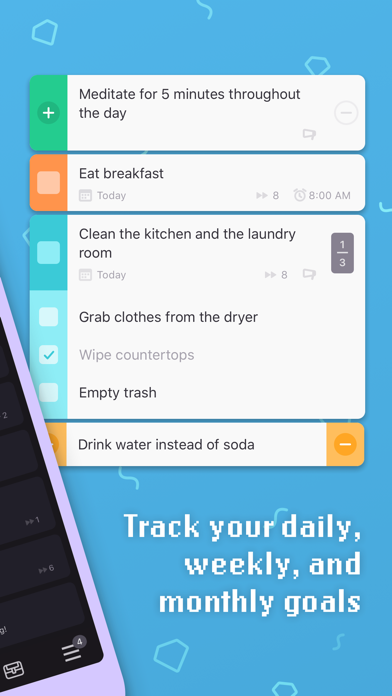
At its core, Habitica is a task manager with a character sheet attached. You create three types of tasks: Habits (behaviours you want to do more or less of), Dailies (recurring tasks that deal damage if missed), and To-Dos (one-off items). Each completion earns experience points and gold; experience levels up your character, and gold buys equipment and cosmetics.
The RPG layer extends into parties. You can join or form a group and tackle Quests together — in-game monsters that take damage when party members complete their tasks, and hit back when members miss. That social mechanic is the secret weapon: letting your teammates down is a different kind of pressure to letting yourself down.
Getting set up: expect to spend time here
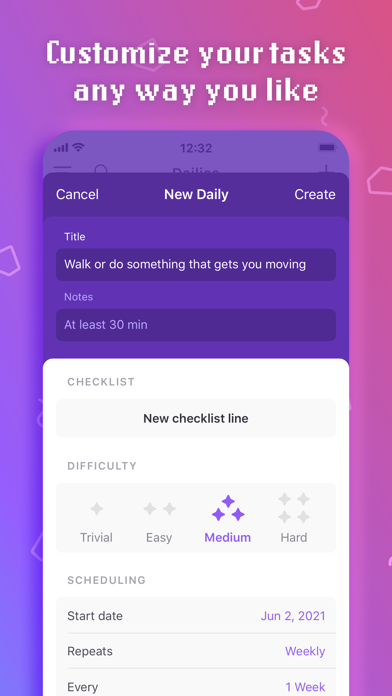
Our time-to-first-value score for Habitica is 2 out of 5, and that reflects reality. Unlike apps that quiz you on arrival and build a plan, Habitica hands you a blank slate. You define every task yourself, which is powerful once your system is dialled in but can feel like homework on day one.
Start with no more than a handful of Dailies. Overloading your task list early means constant red health bars, which demotivates rather than drives. The web version is more capable for initial setup; most users configure things on desktop and then live in the mobile app day-to-day.
The habit loop in practice
Once your tasks are in, the daily ritual is quick. Open the app, tick your completed habits and dailies, watch the numbers move. The satisfying click of a completed daily — the visual feedback, the experience number floating up — is motivating in a way that a plain checkbox rarely matches.
The damage mechanic introduces stakes most apps avoid. Miss too many dailies and your character dies and loses a level. Some users find this galvanising; others say it is the first time a habit app made them care about consistency past week one. Our stickiness score is 5 out of 5 — the highest in the ranking.
Quests, parties and the accountability engine
When your party is on a quest, each member's missed dailies deal damage to the group. That social layer creates a kind of accountability that streaks and badges cannot replicate. Guilds — open communities around shared themes — are the best place to find a party; most have active recruitment threads. The community is genuinely welcoming. If you prefer solo play, the party system is optional.
Pricing and what you actually need to pay
Habitica's pricing model is rare: the full functional app is genuinely no-cost. Everything that affects habit tracking — task types, quests, parties, guilds and data export — is available without paying. The optional subscription runs around $4.99 per month at the time of writing (cheaper for longer terms; confirm current pricing in the App Store or Google Play), adding cosmetics and a gem allowance. Nothing behind the paywall will help you build better habits. The subscription exists to support development, and paying it is a reasonable way to back a tool you use — but it is not necessary.
Method and credibility
Habitica draws on variable rewards and social accountability without citing any named framework. No CBT, no ACT. The method subscore sits at 3.3 out of 5 — the lowest in Habitica's profile. Gamification has a reasonable evidence base for motivation-constrained behaviours, but users who want therapy-adjacent content will need to look elsewhere. There are no crisis resources; this is a productivity tool and does not pretend otherwise.
What Habitica is missing
The gaps are significant if you want a rounded self-improvement tool. There is no mood tracking, no journaling, no meditation content, no courses, and no AI companion of any kind. Health app sync is absent. The app does one thing, deliberately.
Store ratings are lower than most apps in our ranking — around 4.3 on iOS and 4.1 on Android at the time of writing — and user reviews frequently cite the same onboarding friction and occasional sync issues. The pixel-art aesthetic is charming to fans and offputting to everyone else; there is little middle ground.
How Habitica compares to Finch and Liven
The closest competitor in spirit is Finch — also gamified, but warmer, more guided, and better suited to gentle self-care habit building. Habitica has the deeper productivity system and the social party mechanic. Finch scores higher on personalisation; Habitica wins on task-system flexibility and costs nothing to use fully.
Liven, our top-ranked app overall, beats Habitica on almost every dimension except price and stickiness. It offers mood tracking, journaling, courses, an AI companion and guided frameworks. But Liven costs considerably more and has a more complex onboarding with noted upsell friction. If you want habits without the wellbeing layer, Habitica at no cost is a strong case.
Privacy and data
Habitica is open-source, which means its code is publicly auditable — a level of transparency uncommon among consumer apps in this space. Your tasks, notes and party activity are stored server-side; check the current privacy policy before adding sensitive data. Data export is available, and technically inclined users can self-host, though that is not a realistic path for most people.
Our verdict on Habitica
Habitica occupies a specific, defensible niche. It will not help you meditate, reflect, or understand your emotions. What it will do is make it socially awkward to skip your habits, and for some people that is enough. Our overall score is 3.8 out of 5 — held back by limited personalisation, absent wellbeing content and an onboarding experience that asks too much of new users.
The no-cost, fully functional model is rare. Our stickiness rating of 5 out of 5 is the highest in our ranking alongside Liven, and that says something real about long-term retention. If conventional habit trackers have not stuck for you, and the idea of a party watching your progress sounds motivating rather than mortifying, Habitica is worth a try.
Maker: Habitica · Platforms: iOS, Android, Web · Approach: Self-guided, gamified · Methods: habit formation, gamification
Habitica plans & pricing
Free tier: Fully usable free; optional subscription supports development and adds perks.
Trial: No trial needed — the core app is free.
Prices approximate, as of June 2026 — verify on the App Store / Google Play. Everything essential is free; the subscription adds cosmetic and convenience perks.
Cancellation: Cancel any time through your app-store or web subscription; the free app keeps working.
Feature checklist
- Mood tracking—
- Journaling—
- AI companion—
- Courses & lessons—
- Meditations—
- Soundscapes / focus music—
- Habit & routine builderYes
- RemindersYes
- Quiz / assessment—
- CommunityYes
- Live coaching—
- Crisis resources—
- Data exportYes
- Apple Health / Google Fit—
- Home-screen widgetsYes
- Offline usePartial
Habitica pros & cons
What's good
- Core app is fully usable at no cost — subscription adds cosmetics, not functionality
- Party system and guilds create genuine external accountability
- Works across iOS, Android and web, so your data goes with you everywhere
- Quest mechanic ties your real-world habits to a shared team goal
- Highly customisable task types: habits, dailies and to-dos each behave differently
- Data export available for users who want a record of their progress
What to weigh up
- No mood tracking, journaling, meditations or any wellbeing content — purely habits and tasks
- Initial setup demands more time and thought than most rivals: you build the whole system yourself
- Pixel-art aesthetic and RPG framing will alienate users who find it juvenile
- App Store rating (around 4.3 at the time of writing) and Google Play rating (around 4.1) are lower than most competitors in this space
- No health app sync and only partial offline functionality
Support
Habitica has a community wiki, active forums and a help centre maintained by its volunteer community. Direct support can be slow given the team size; the wiki is your fastest route to most answers.
Method & credibility
Habitica uses variable rewards and social accountability — mechanisms present in habit-formation research — but does not cite named frameworks like CBT or ACT. The approach is pragmatic rather than clinically grounded.
Privacy & data
Habitica is open-source, which makes its codebase publicly auditable. Your task data and party chat sit on their servers — check the current privacy policy for specifics on storage and use.
Third-party ratings
- 4.3 / 5 on App Store — as of June 2026, verify
- 4.1 / 5 on Google Play — as of June 2026, verify
We report independent ratings with their source and date and never invent them. Figures here are approximate and pending verification before launch.
Our data: Habitica
Two numbers we measure ourselves, on the same 1–5 scale for every app — the things most roundups never score (see all 20 on the compare page):
Habitica FAQ
Is Habitica really free to use?
Yes. Every feature that affects habit tracking — task types, quests, parties, guilds and data export — is available at no cost. The optional subscription (around $4.99 per month at the time of writing; confirm current pricing in the App Store or Google Play) adds cosmetics and a gem allowance, but nothing behind it will improve your habit building.
Do I need to join a party to get value from Habitica?
No — the app works fine as a solo tool. You can run quests against NPC monsters and use all the task mechanics alone. That said, the party accountability system is arguably the most effective feature for long-term stickiness, so worth trying if social pressure works for you.
How is Habitica different from Finch?
Both use game mechanics for habits, but to different ends. Finch is warmer and more guided — you care for a virtual bird and follow self-care exercises. Habitica is a productivity system with an RPG overlay: you build your own task structure and accountability comes from a human party. Finch suits gentle, wellbeing-focused habit building; Habitica suits people who want a flexible task system with social stakes.
What happens if I miss my dailies?
Your character loses health, and if you are in a party, the group takes damage too. Enough misses and your character dies, resetting your level. Some users find this galvanising; others find it demoralising. You can adjust the penalty via difficulty settings or use Resting-in-Inn mode when you know you cannot check in.
Is Habitica suitable as a mental health tool?
No. Habitica is a habit and productivity app with no crisis resources, no CBT content and no mood tracking. It is built for everyday habit building, not wellbeing support in any clinical sense.