Finch Review: 2026 Overview
The verdict
4.2/ 5 A self-care app that turns daily check-ins into a small act of kindness for a virtual bird you actually want to look after.
Finch earns its stickiness score of 5 out of 5 honestly: the bird mechanic is disarmingly effective at keeping you coming back, and the no-cost tier is genuinely usable. It is not the app for deep psychological frameworks or structured personal-development programmes — but if previous habit apps have collected dust, Finch's soft gamification might be the difference between opening it and deleting it.
Finch does something most self-care apps skip entirely: it gives you a reason to show up that has nothing to do with self-improvement. Your virtual bird needs you. Feed it, send it on journeys, watch it grow. The fact that you also log your mood and tick off a self-care goal is almost incidental — until you notice, a few weeks in, that you have actually kept up with those goals.
The app is built by Finch Care and runs on iOS and Android. It sits at rank 5 in our current table with an overall score of 4.2 — the same headline number as Calm and Balance, but with one significant edge: a stickiness score of 5 out of 5, the highest we gave this month. That is the metric we care about most after the first fortnight, and Finch earns it cleanly.
What Finch actually is (and is not)
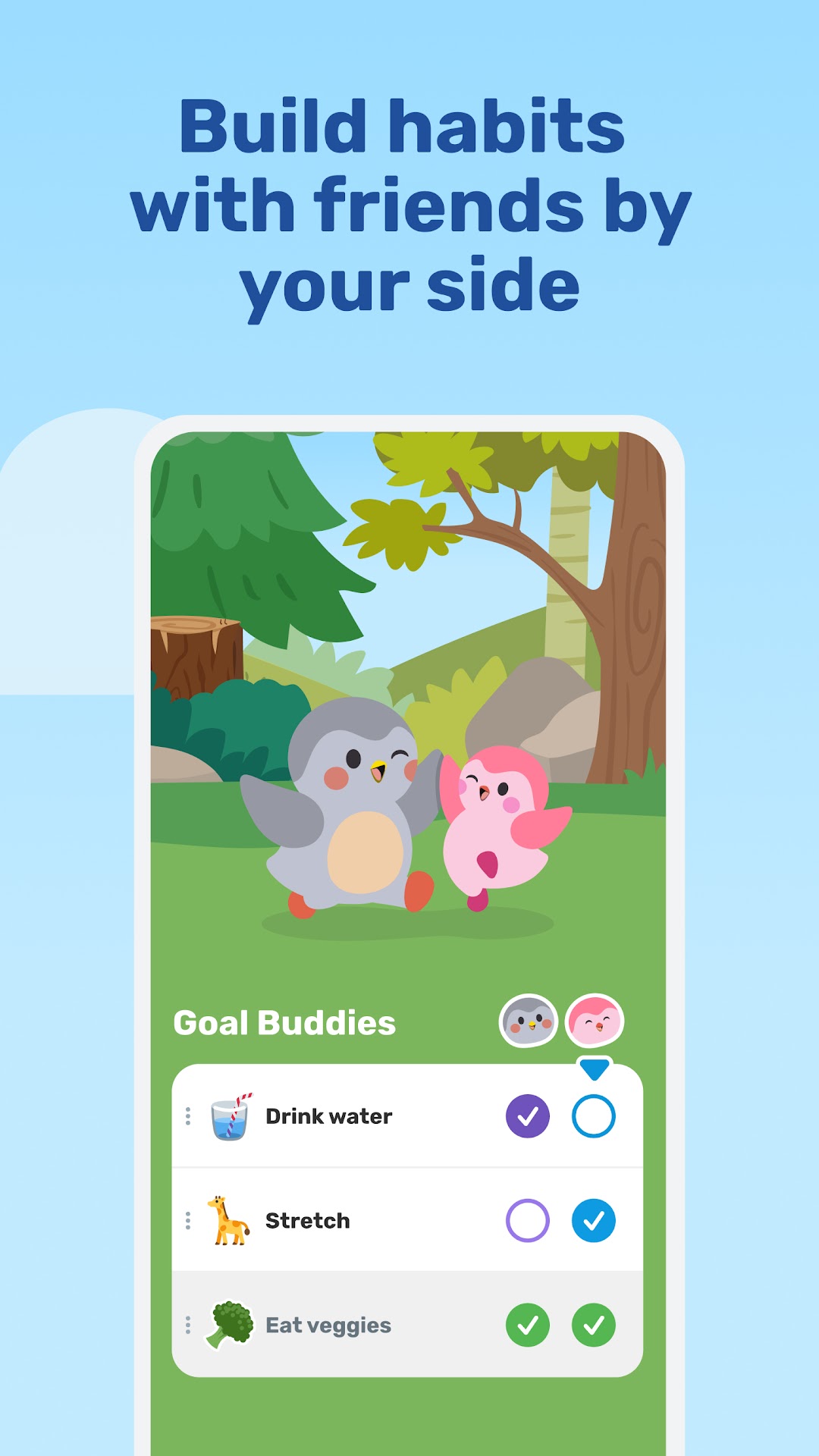
Strip away the bird and Finch is a light self-care tracker: daily mood logs, a habit checklist, short written reflections and a handful of guided breathing exercises. The bird is the glue. You set self-care goals — drink water, go outside, take a break — and completing them earns energy crystals that feed your pet and fund its adventure trips.
What it is not: a structured mental-health programme, a meditation library or a course platform. There are no CBT modules, no therapist-written curriculum, no AI companion to talk things through with. If you want depth and named frameworks, Liven or Wysa are better fits. Finch is for people who want a low-friction daily ritual, not a rigorous programme.
That scope is a feature as much as a limitation. The narrower remit means the app does not overwhelm you with choices. You open it, check in, do your goals, send your bird on its way. The whole routine takes a few minutes.
First run: getting started with Finch
Onboarding is quick. You name and customise your bird, answer a few questions about what you want to work on, and reach the home screen within minutes. Our time-to-first-value rating is 4 out of 5 — you are doing real check-ins on day one, not sitting through a lengthy orientation.
The app asks for notification permissions early; those reminders matter more here than in most apps because the bird mechanic loses momentum if you forget to open Finch for a few days. Set a reminder that overlaps with an existing habit, and the loop tends to stick.
How the bird mechanic drives behaviour
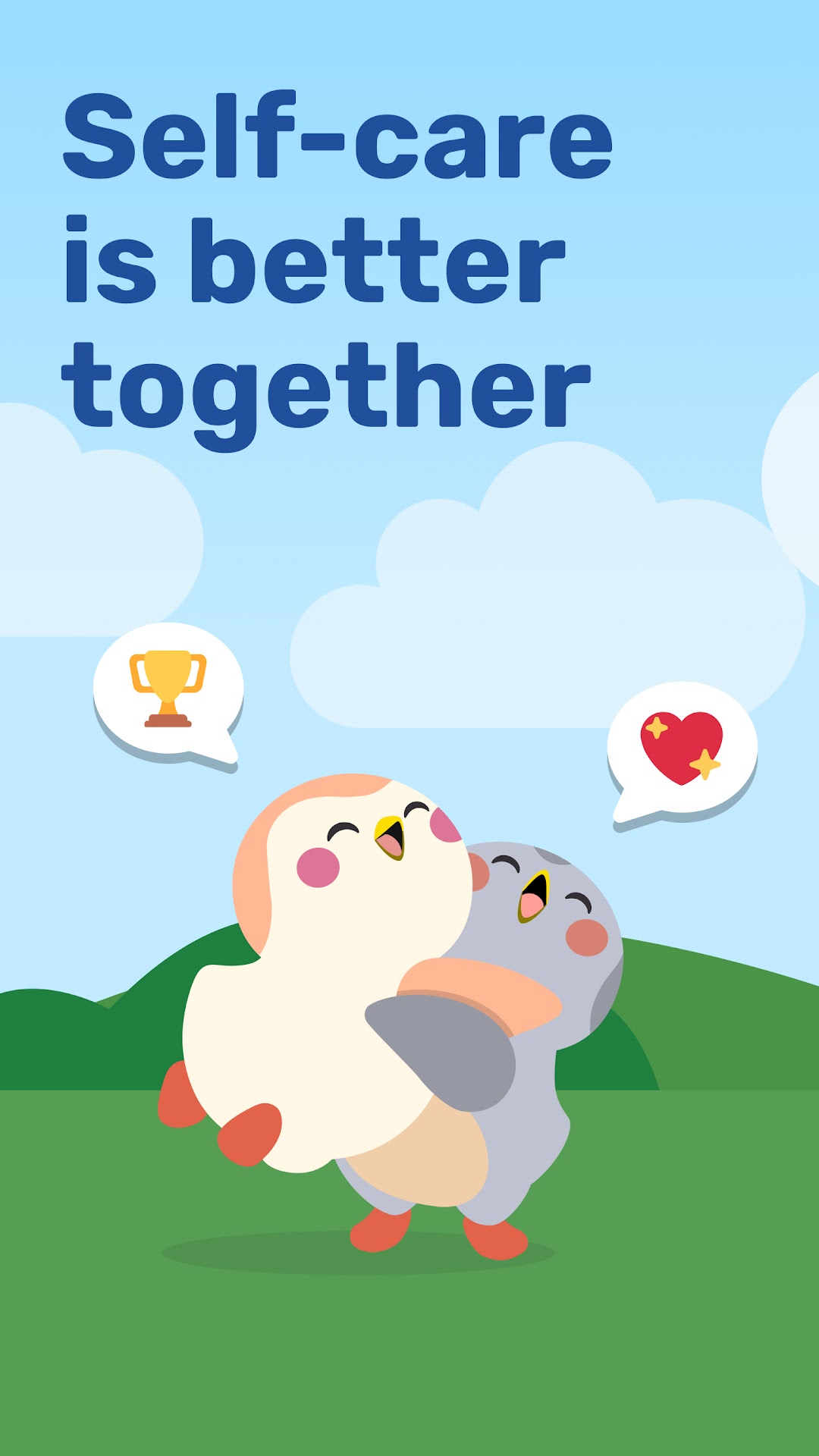
Your bird starts as a chick. It grows as you complete goals and log self-care. It goes on trips — small illustrated journeys — and returns with postcards. None of this has any practical consequence, but it works surprisingly well as a motivational loop. The behavioural principle at play is simple: the bird creates a low-stakes commitment device that makes skipping a day feel mildly rude rather than merely lazy.
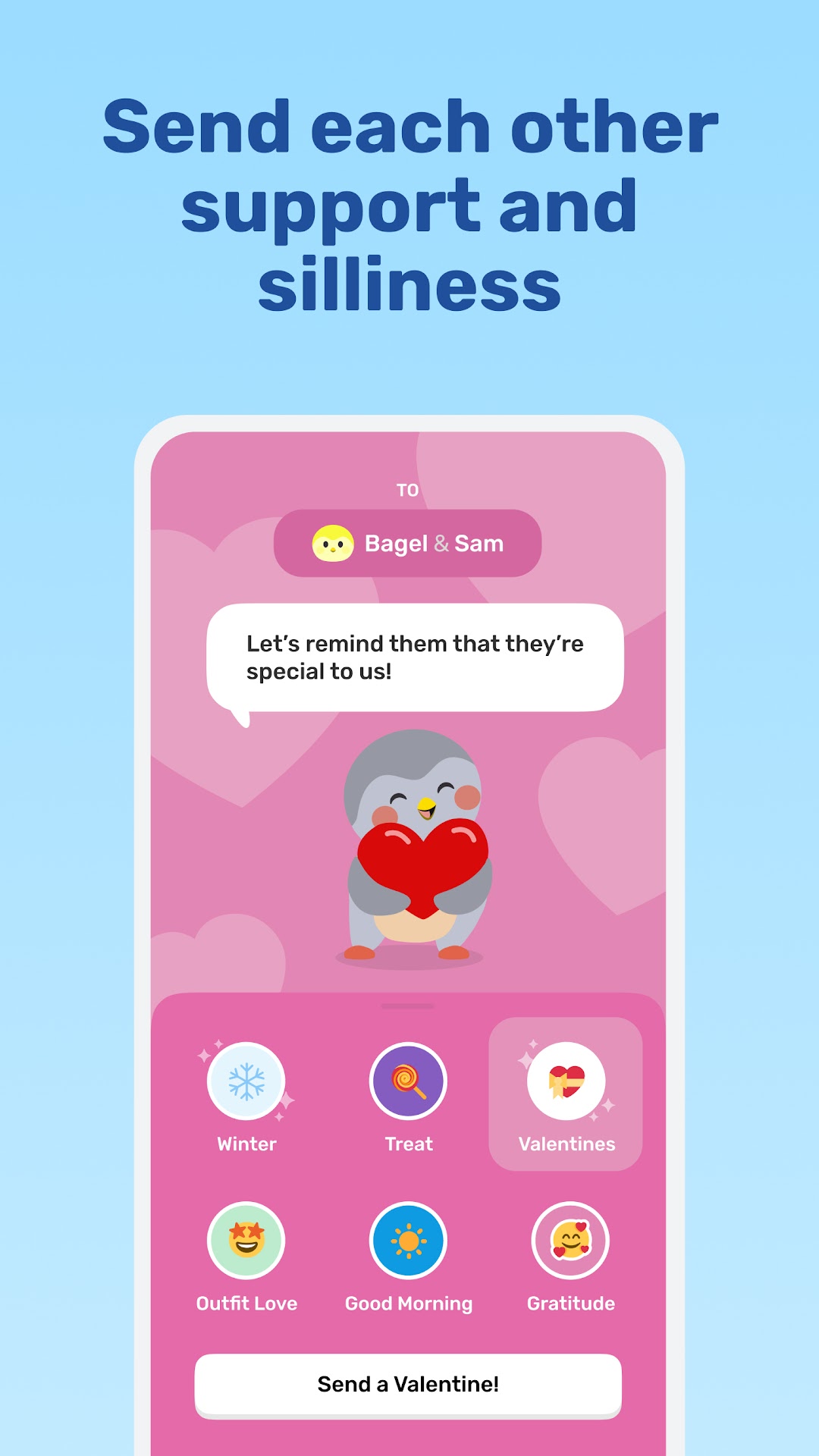
The friends feature extends the mechanic socially. You can connect with other Finch users, send each other's birds on trips, and see how friends are getting on. It is gentle rather than competitive — no leaderboards, no public streaks. For many users, that low-pressure social layer is exactly what they want from a habit app.
The loop also forgives missed days without drama. There is no angry notification, no broken streak counter, no guilt trip. You come back, the bird is still there, and you carry on. That sounds trivial, but in practice it removes a significant friction point that causes users to abandon other apps permanently after a single lapse.
Self-care goals, habits and the journaling space
You build a daily list of goals from a library of suggestions or write your own. These range from concrete — drink a glass of water, take a walk — to reflective — write down one thing you are proud of. Ticking them off is satisfying in a deliberately ordinary way. Finch keeps habits approachable rather than aspirational.
The mood tracker is a quick emoji-and-intensity tap, not a granular emotion wheel. It is enough to notice patterns over time but less rich than something like How We Feel's vocabulary-based system. The journaling space is minimal: a text box without prompts or templates. Experienced journallers will find it thin; beginners will probably not miss the structure.
Reminders are customisable per goal, which is a practical touch. You can set a water reminder for mid-morning and a reflection prompt for the evening without them colliding in a single notification block.
Day-to-day feel after the first fortnight
The experience stays consistent past the novelty phase, which is where most habit apps fail. The bird grows visibly, the trips become a small daily curiosity, and the goals stay relevant because you chose them. There is no pressure to add more goals or escalate your ambition. The app does not push you to upgrade with the frequency some rivals use.
The aesthetic is intentionally soft: pastel palette, rounded edges, gentle animations. Some users will find this pleasant; others will find it juvenile. It is a fair trade-off for an app that prioritises emotional safety over minimalist slickness.
Method and credibility: what the score means
Finch's evidence score of 3.7 out of 5 honestly reflects a light approach. The app references habit formation and folds in some CBT-adjacent framing — reframing exercises, self-compassion prompts — but it does not foreground named clinical frameworks or point to external research. The gamification itself is behavioural science applied intuitively rather than explicitly.
That is fine for an everyday self-care tool. But if a professional has recommended structured CBT exercises, Wysa or Liven's more framework-heavy approach will serve you better. Finch is support for ordinary wellbeing, not a clinical-adjacent programme.
Pricing: the no-cost tier earns its reputation
The no-cost tier is genuinely usable, which is not something you can say about every app in this category. The core loop — goals, mood tracking, journaling, bird growth — is fully accessible without paying anything. Finch Plus, at around $8.99/month or about $39.99/year at the time of writing, adds extra customisation, deeper insights and additional content. Confirm current pricing in the App Store or Google Play before subscribing.
A free trial is offered on Finch Plus, and cancellation runs through your app-store subscription, which is the standard and relatively straightforward route. If you cancel Plus, the no-cost tier remains usable — a meaningful difference from apps where cancelling leaves you with almost nothing. That safety net makes it genuinely low-risk to try.
What Finch lacks compared with rivals
No health-app sync is a noticeable gap. Apps like Liven, Headspace and Calm connect to Apple Health or Google Fit; Finch keeps your data siloed. There is also no data export, so your mood history and journal entries cannot be pulled out for backup or analysis elsewhere.
The breathing exercises are limited compared with a dedicated meditation app — do not expect a Headspace-level guided library. And there is no AI companion. If you want a conversational element to your self-care practice, Wysa or Liven's chat feature will do things Finch simply cannot.
Finch versus Liven: different jobs, different strengths
Liven is our current number one, scoring 4.5 against Finch's 4.2. The gap shows in depth (4.8 versus 4.1), personalisation (4.8 versus 4.4) and method credibility (4.3 versus 3.7). Liven gives you a quiz-to-plan onboarding, named clinical frameworks, an AI companion and a course library. It is a more complete self-improvement platform.
Finch wins on value score (4.3 versus 3.7), and both share the top stickiness rating of 5. Liven's upsell-heavy onboarding and premium pricing are real friction points; Finch's no-cost tier and gentle approach carry a much lower barrier to entry. If the problem you are solving is stickiness rather than depth, Finch is a strong answer. Some users run both: Finch for the daily check-in habit, Liven for the structured programme.
Finch versus Habitica: two takes on gamified habits
Habitica takes gamification much further — full RPG, parties, quests, and actual consequences when you miss habits. It is more intense, more social and more complex to set up. Finch is warmer, softer and more focused on self-compassion than performance. Habitica's no-cost tier is arguably even more complete than Finch's; Finch wins on emotional tone and ease of onboarding.
The right choice depends on personality. If you respond to competition and stakes, Habitica. If you prefer nurturing to battling, Finch. They are not really competing for the same user.
Privacy
Finch collects mood data, journal entries and usage patterns to run the app. The absence of health-platform sync limits one category of data sharing, but your emotional data still lives on Finch's servers. Always read the current privacy policy before adding sensitive content to any wellbeing app — policies change, and the detail matters.
Our overall verdict on Finch
Finch sits at rank 5 in our table for good reasons. The stickiness is real, the no-cost tier is honest, and the bird mechanic does what few app features manage: it makes you want to come back without making you feel guilty if you missed a day. That is a harder trick than it looks.
The limits are also real. No health sync, no exports, limited depth, light credibility. For a rigorous programme, look at Liven. For an enormous meditation library, look at Headspace or Calm. But if you have tried three habit apps and abandoned all of them by day eight, Finch is worth a serious try — start with the no-cost tier and see if the bird sticks.
Maker: Finch Care · Platforms: iOS, Android · Approach: Self-guided, gamified · Methods: habit formation, self-care, CBT-style exercises
Finch plans & pricing
Free tier: Generous free tier; Finch Plus unlocks extras.
Trial: Free trial offered on Finch Plus.
Prices approximate, as of June 2026 — verify on the App Store / Google Play. Core self-care works free; Plus adds extra customisation, insights and content.
Cancellation: Cancel through your app-store subscription; the free tier remains usable after.
Feature checklist
- Mood trackingYes
- JournalingYes
- AI companion—
- Courses & lessonsGuided exercises
- MeditationsBreathing
- Soundscapes / focus musicLimited
- Habit & routine builderYes
- RemindersYes
- Quiz / assessmentYes
- CommunityFriends/support
- Live coaching—
- Crisis resourcesYes
- Data export—
- Apple Health / Google Fit—
- Home-screen widgetsYes
- Offline usePartial
Finch pros & cons
What's good
- Generous no-cost tier covers the core self-care loop without a paywall
- App Store rating around 4.8 and Google Play around 4.7 as of writing — consistently high across both stores
- Stickiness score of 5 out of 5, the highest we awarded this month
- Habit builder, mood tracking, journaling and light breathing exercises in one place
- Friends support feature adds a gentle social layer without leaderboards or comparison pressure
- Finch Plus is among the more affordable paid tiers in this category — around $39.99/year at the time of writing
What to weigh up
- No AI companion, no courses, no structured programme — depth score of 4.1 reflects that
- Method and credibility score of 3.7 is lower than most rivals; CBT-style framing is light rather than rigorous
- No health-app sync and no data exports — your history lives inside Finch
- Offline use is only partial, which can frustrate users on the move
- Some users will outgrow the bird metaphor and want something with more substance
Support
Finch provides in-app support and a help centre; response times and quality are hard to verify independently. Check current support options inside the app before assuming real-time help is available.
Method & credibility
Finch references habit formation and includes light CBT-style exercises, but it does not name clinical frameworks prominently or cite published research in the app itself. The approach leans on behavioural nudging through the pet mechanic rather than any single named methodology.
Privacy & data
Finch collects personal and mood data to run the app. As with any wellbeing tool, read the current privacy policy before signing up, especially if you plan to log sensitive emotional content. The app does not sync with Apple Health or Google Fit, which limits some data sharing but also keeps your mood history contained to Finch.
Third-party ratings
- 4.8 / 5 on App Store — as of June 2026, verify
- 4.7 / 5 on Google Play — as of June 2026, verify
We report independent ratings with their source and date and never invent them. Figures here are approximate and pending verification before launch.
Our data: Finch
Two numbers we measure ourselves, on the same 1–5 scale for every app — the things most roundups never score (see all 20 on the compare page):
Finch FAQ
Is Finch's no-cost tier genuinely usable?
Yes. The core self-care loop — daily goals, mood logging, journaling and bird growth — is available without paying. Finch Plus adds extra customisation, insights and content, but you can use the app meaningfully without upgrading. Confirm what the current Plus plan includes in the App Store or Google Play, as features can change.
How does the bird mechanic actually work?
You complete self-care goals each day to earn energy crystals. Those crystals feed your bird and send it on illustrated adventure trips. The bird grows visibly over time and returns from trips with postcards. It is entirely cosmetic — no competitive scoring or leaderboard — but users consistently report it is the thing that keeps them opening the app past the first week.
Does Finch sync with Apple Health or Google Fit?
No. At the time of writing, Finch does not offer health-platform sync. Your mood and habit data stays within the app. If health-data integration matters to you, apps like Liven, Headspace or Calm support it — check current feature lists before deciding.
How does Finch compare to Habitica for habit tracking?
Both are gamified, but the tone is very different. Habitica is an RPG with parties, quests and consequences for missing habits. Finch is softer and more self-compassion-focused — nurturing a pet rather than fighting monsters. Habitica's no-cost tier is very complete; Finch is easier to onboard and gentler in feel. The right pick depends on whether you are motivated by consequences or by care.
Can I use Finch for journaling?
There is a journaling text box in the app, but it is minimal — no guided prompts, no templates. It suits brief daily notes rather than reflective writing sessions. If journaling is central to your practice, Day One or Rosebud offer far richer environments.
What happens if I cancel Finch Plus?
The no-cost tier remains usable after cancellation. You lose Plus-only features but keep your bird, your history and the core self-care loop. Cancel through your App Store or Google Play subscription settings — the no-cost experience does not disappear.