
BetterMe: Mental Health Review: 2026 Overview
The verdict
3.8/ 5 A quiz-first wellbeing app that packs in guided courses, meditations, mood tools and habits — then charges you a subscription to use them.
BetterMe: Mental Health covers a lot of ground — mood tracking, journaling, guided courses, meditations, soundscapes and habits in one app. The quiz onboarding creates a quick sense of personalisation. Where it stumbles is on value and trust: pricing varies by funnel, billing complaints are a recurring theme in store reviews, and the methods rely on CBT-style language rather than named frameworks. Read the terms carefully before subscribing.
BetterMe: Mental Health is a quiz-driven wellbeing app that tries to cover everything — courses, meditations, mood tracking, journaling, habits and soundscapes in a single subscription. The feature count is high for the price tier.
The catch is that the experience around the subscription is where BetterMe draws the most criticism. Pricing shifts by funnel, billing complaints recur in store reviews, and the methods lean on wellness language rather than specific named frameworks. There is a workable app inside, but approach the sign-up process with care.
What BetterMe: Mental Health actually is
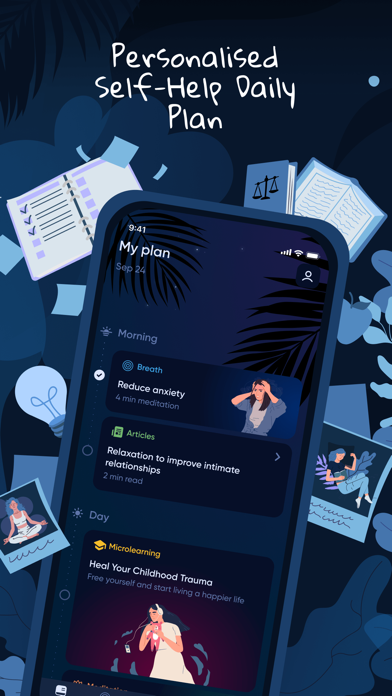
BetterMe started as a fitness app and later expanded into mental health and wellbeing. The Mental Health version covers emotional and personal-development ground — stress, sleep, anxiety management, self-esteem — through guided courses, meditations, mood tracking, journaling and a habit builder. It runs on iOS and Android.
The core idea is a subscription programme shaped by an onboarding quiz. The no-cost portion amounts to that quiz and a brief preview — enough to gauge tone, not enough to test the content itself. BetterMe is a self-help tool for everyday wellbeing, not a clinical service.
Who it is designed for
BetterMe suits someone who wants one app rather than separate tools for mood, meditation and habits. The content is broad rather than deep, so it works best as an introduction rather than a specialist resource.
It is a weaker fit for people who already use a dedicated meditation app and want something more rigorous, or for anyone who wants to export their data — there is no export option. If billing friction is a dealbreaker, the patterns in store reviews are a genuine warning sign.
The quiz onboarding: quick, but how personal is it really?
The onboarding quiz takes a few minutes and covers stress levels, sleep quality, emotional goals and lifestyle. At the end it produces a personalised programme summary. In practice, this mostly determines which part of the content library you are pointed toward first — it is not the same as a genuine adaptive plan that responds to your ongoing progress.
Our time-to-first-value score is 3 out of 5. You reach a usable plan quickly, but the value depends on whether the content behind the paywall matches the promise in the quiz. That is something you can only verify once you have subscribed.
The quiz funnel also introduces the pricing, which varies by entry point and promotional status. At the time of writing, the quarterly plan ran around $30 and the yearly plan around $60 — confirm in-app before committing.
The content library: breadth over depth
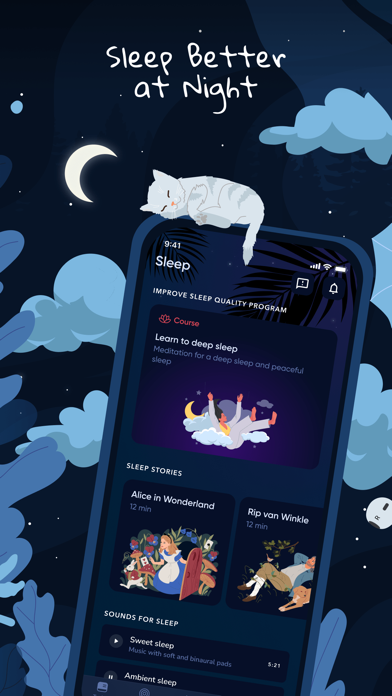
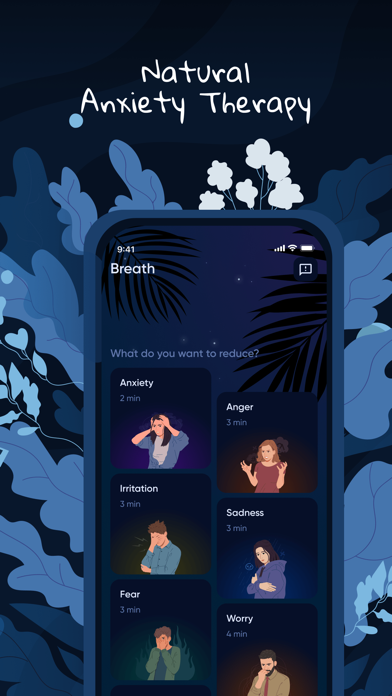
The subscription opens up guided courses on themes like managing anxiety, building resilience and improving sleep — structured as short audio or video modules. The mood tracker and journaling prompts are functional. Meditations cover breathing exercises, body scans and soundscapes, which is enough for a newcomer to the format.
None of these features are class-leading compared to dedicated apps: Headspace does meditation better, Daylio does mood tracking better, The Fabulous does habits better. Having them together in one place is a genuine convenience. Assessments, crisis resources, health sync and home-screen widgets are all present.
Day-to-day experience after the first week
The daily rhythm BetterMe aims for is a check-in, a short programme session and a habit tick. The interface is clean enough, though upsell prompts can appear even after you have subscribed.
Our stickiness score is 3 out of 5. The app does not do much to pull you back after a few missed days, and the structure does not rebuild momentum the way a more gamified or coaching-led app might. Users who need external accountability may find BetterMe fades by week three.
Method and credibility: the honest picture
BetterMe references CBT-style exercises, mindfulness and positive psychology, but does not publish method documentation or name specific clinical protocols — unlike Wysa (CBT, DBT) or Liven, which lists its frameworks. That places BetterMe in self-help territory rather than anything approaching clinical support. Our method score was 3.4 out of 5 at the time of writing.
Pricing and the subscription issue you need to know about
BetterMe's pricing is not fixed across all entry points. The quarterly plan runs around $30 and the yearly plan around $60 at the time of writing, but these vary by funnel and promotional status. Confirm the exact price in-app or in the store listing before subscribing.
Billing and cancellation are where BetterMe draws the most consistent criticism. Store reviews on both platforms include repeated complaints about unexpected renewals and difficulty getting refunds. Cancellation goes through your App Store or Google Play subscription settings. Set a renewal reminder as soon as you subscribe.
At around $60 per year for a broad but not specialist toolkit, value is moderate. Liven covers comparable ground at a similar price and adds an AI companion. Wysa offers a largely no-cost tier with more explicit CBT grounding. On most measures, neither requires the leap of faith BetterMe asks for.
How BetterMe compares to Liven and Wysa
Liven (our current top pick) covers most of the same ground and adds an AI companion, better method transparency and a higher stickiness score at a comparable price. Liven has its own upsell-heavy onboarding, so neither app is spotless on the trust dimension — but Liven edges ahead on almost every content criterion.
Wysa leads with an AI chatbot, names its CBT and DBT methods explicitly, and offers a largely no-cost tier for core use. If evidence and structure matter more to you than breadth, Wysa is the stronger pick. BetterMe's advantage is content variety in one package, especially for Android users who find Liven's Android experience less polished.
Privacy and data: what to check before you sign up
BetterMe handles mood logs, journal entries, assessment results and health sync data. For any mental-health adjacent app, reading the current privacy policy before entering personal information is worth a few minutes — particularly around third-party data sharing and what happens to your records if you cancel.
There is no export function, so your records stay inside the app and cannot be moved elsewhere. Check the current policy on BetterMe's website directly.
Final verdict
BetterMe: Mental Health scores 3.8 out of 5. It earns that through feature breadth and a smooth onboarding experience. It loses ground on method credibility, value transparency, stickiness and the billing-related trust issues that persist across platform reviews. If you read the terms carefully, there is a functional wellbeing app here — but Liven or Wysa are likely better fits at a comparable price.
Maker: BetterMe · Platforms: iOS, Android · Approach: Self-guided · Methods: CBT-style, mindfulness, positive psychology
BetterMe: Mental Health plans & pricing
Free tier: A free quiz and preview; the program is paid.
Trial: Trial variants via the quiz funnel.
Prices approximate, as of June 2026 — verify on the App Store / Google Play. The personalised program, courses and meditations sit behind the subscription.
Cancellation: Manage and cancel through your app-store subscription. BetterMe has drawn notable billing and cancellation complaints — read the terms and renewal date carefully.
Feature checklist
- Mood trackingYes
- JournalingYes
- AI companion—
- Courses & lessonsYes
- MeditationsYes
- Soundscapes / focus musicYes
- Habit & routine builderYes
- RemindersYes
- Quiz / assessmentYes
- Community—
- Live coaching—
- Crisis resourcesYes
- Data export—
- Apple Health / Google FitYes
- Home-screen widgetsYes
- Offline usePartial
BetterMe: Mental Health pros & cons
What's good
- Wide feature set: mood tracking, journaling, guided courses, meditations, soundscapes, habits and assessments in one app
- Quiz-driven onboarding creates a personalised programme feel from day one
- Available on both iOS and Android
- Health sync and home-screen widgets supported
- Crisis resources included
- App Store rating of around 4.7 at the time of writing suggests broadly satisfied users on iOS
What to weigh up
- Billing and cancellation complaints are a notable pattern in store reviews — read the terms before subscribing
- Pricing varies by funnel and is not always transparent upfront
- No AI companion, which rivals at a similar price point now offer
- Method credibility is weaker than more evidence-grounded apps: CBT-style and mindfulness language but no clearly named clinical frameworks
- No data export, limiting how much you own your own records
- Stickiness is modest — the app structure does not pull you back strongly after the first couple of weeks
Support
BetterMe offers in-app help and an online support centre. Manage subscriptions through your App Store or Google Play account — BetterMe cannot cancel or refund app-store purchases on your behalf.
Method & credibility
BetterMe references CBT-style techniques, mindfulness and positive psychology in its content, but the app does not name specific clinical protocols or publish method documentation. It sits closer to structured self-help than to an evidence-audited programme.
Privacy & data
BetterMe handles sensitive self-reported data including mood logs, journal entries and assessment results. Check the current privacy policy on BetterMe's website and in the app store listing before signing up, as data practices can change and this is worth reading carefully for any mental-health adjacent app.
Third-party ratings
- 4.7 / 5 on App Store — as of June 2026, verify
- 4.2 / 5 on Google Play — as of June 2026, verify
We report independent ratings with their source and date and never invent them. Figures here are approximate and pending verification before launch.
Our data: BetterMe: Mental Health
Two numbers we measure ourselves, on the same 1–5 scale for every app — the things most roundups never score (see all 20 on the compare page):
BetterMe: Mental Health FAQ
Is BetterMe: Mental Health the same as the BetterMe fitness app?
No. They share a brand but are distinct products with different content. The Mental Health app focuses on emotional wellbeing, stress, sleep and related themes.
How much does BetterMe: Mental Health cost?
Pricing varies by funnel. At the time of writing the quarterly plan ran around $30 and the yearly plan around $60 — confirm the exact figure in-app before subscribing.
Can I cancel BetterMe easily?
Cancellation goes through App Store or Google Play settings, not BetterMe directly. Store reviews include a notable volume of billing and cancellation complaints, so check the terms and set a renewal reminder before you start a trial.
Does BetterMe: Mental Health use CBT?
The app references CBT-style exercises and mindfulness throughout, but does not publish method documentation or name specific clinical protocols. It is a self-help tool, not a clinical programme.
Is there a no-cost version of BetterMe: Mental Health?
The quiz and a brief preview are no-cost. Everything else — courses, meditations, mood tools and the personalised programme — sits behind the paid subscription.
How does BetterMe compare to Headspace or Calm for meditation?
Headspace and Calm are stronger choices for meditation. Both have deeper libraries and clearer methodology. BetterMe includes meditations as part of a broader toolkit, but they are not its core strength.