Balance Review: 2026 Overview
The verdict
4.2/ 5 A meditation app that builds your plan around you, not the other way round.
Balance earns its rank by doing one thing unusually well: it listens to what you say about your goals and experience, then adjusts the content rather than just recommending from a fixed menu. That makes the first month feel genuinely tailored. The friction is what happens after — stickiness is harder to sustain once the novelty of personalisation fades, and the app offers nothing outside meditation to keep you anchored. If meditation is your main practice, it is a strong choice. If you want habit tracking, journaling or an AI companion alongside it, look elsewhere.
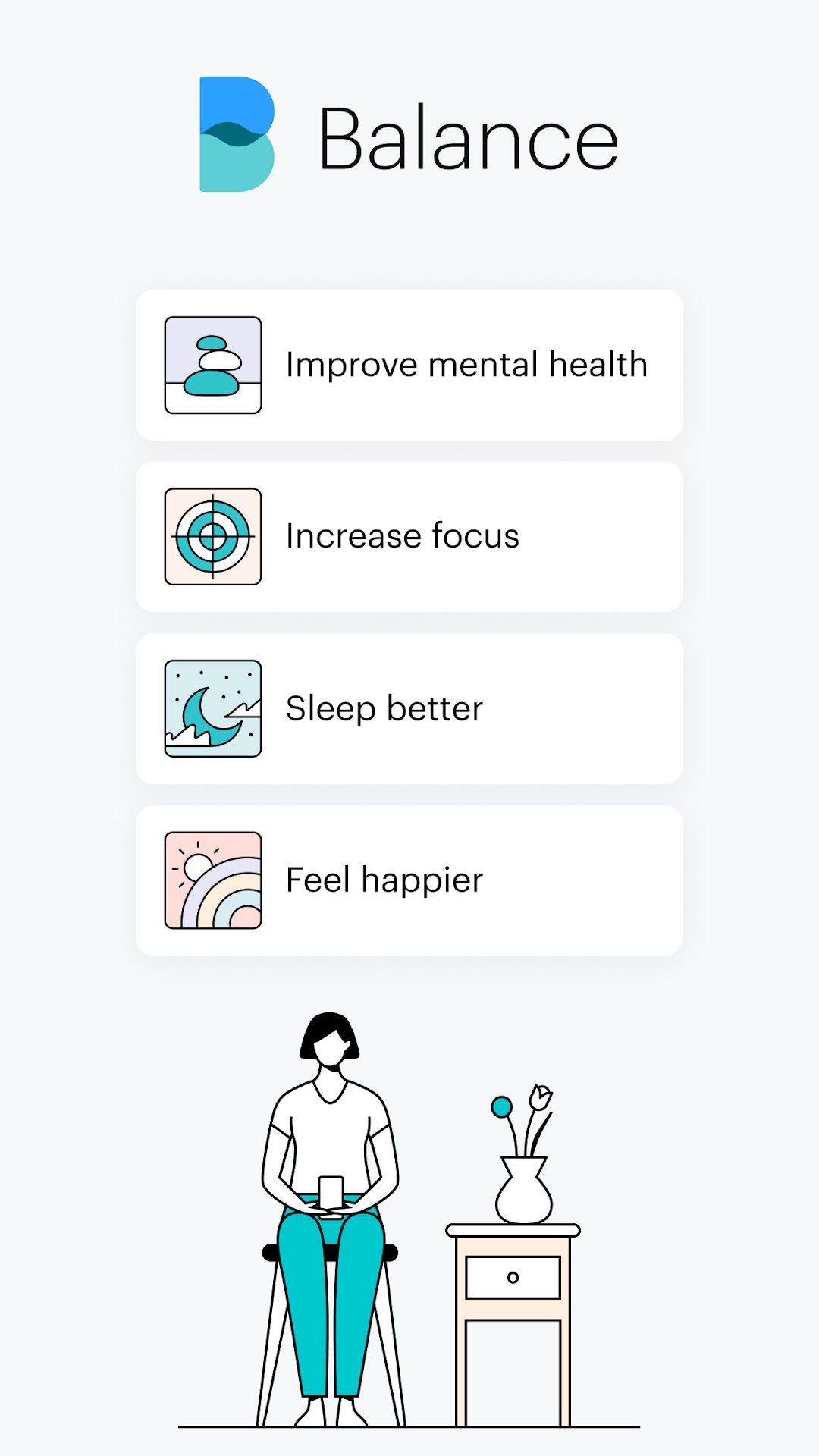
Most meditation apps ask you one question at setup — how much experience do you have — then hand you a catalogue. Balance takes longer with the intake: it wants to know what you are working on, when you practise, and how you have been sleeping. Then it builds a plan rather than a shelf. That is the pitch, and for the most part it delivers.
The app sits at number three on our ranking for personalised experience, and it deserves that position on day one. The question we kept returning to was whether it could hold your attention into month two and beyond. Our stickiness score of 3 out of 5 tells you the honest answer.
What Balance actually is
Balance is a personalised meditation app from Elevate Labs — the team behind the Elevate brain-training app — available on iOS and Android. Its distinguishing feature is adaptive content: as you log sessions and rate how they went, the app adjusts the length, pace and focus of future sessions. It is self-guided, with no live coaches or community layer.
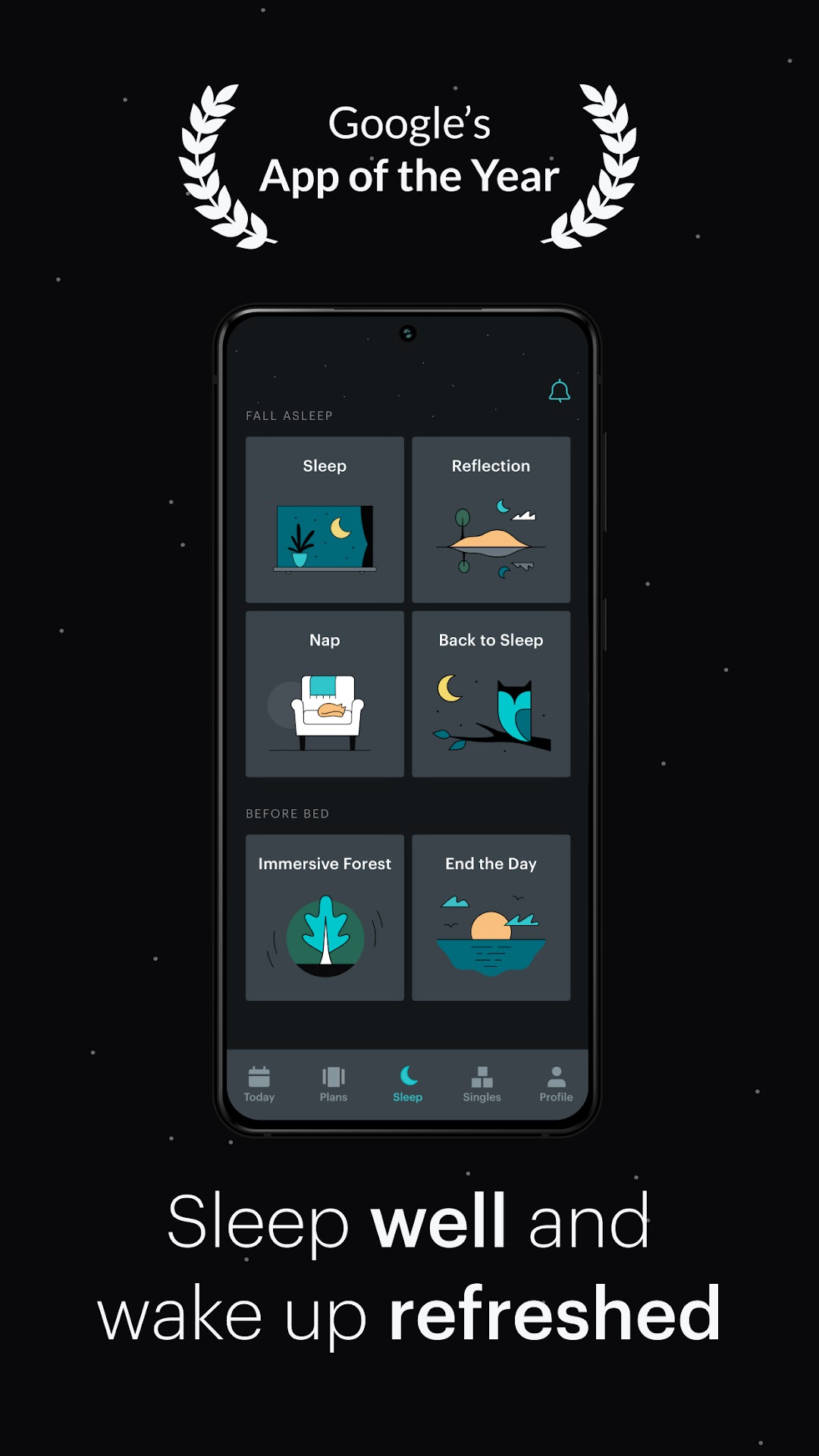
The library covers breath-focused meditation, body scans, sleep sessions, focus work and soundscapes. Everything is audio. There is no journaling, no habit tracker, no mood log beyond a light check-in. If you want a single-purpose meditation tool that moulds to you, Balance has a genuine case. If you need more scaffolding around your practice, it will feel thin.
Setup and first run
Onboarding takes four or five minutes — longer than most meditation apps, purposefully so. You are asked about your goals (sleep, stress, focus, anxiety), your current experience level, your preferred session length and your schedule. The responses shape the first week of sessions you receive.
From first launch to your first completed meditation is roughly ten minutes. That earns Balance our time-to-value score of 4 out of 5 — fast enough, though the onboarding adds a step that a simpler app skips. The first session is noticeably calibrated: if you said you were a beginner, the voice is slower and the instruction more granular.
Notification setup is optional and unobtrusive. The app does not barrage you to return, which is either respectful or risky depending on whether external nudges are what keeps you going.
How the personalisation works in practice
After each session you rate it on a simple scale. Over time, the app uses those ratings to adjust future content — shorter if you flagged sessions as too long, more advanced breathing techniques if you rated the basics as too slow. In the first two to three weeks, this feels genuinely responsive. You can watch the plan shift.
The mechanism is real, not cosmetic. Balance does not just reorder a fixed playlist; the sessions themselves change. That said, the adaptation has limits — you are choosing within a curated library, not generating bespoke audio. Experienced meditators may find the personalisation ceiling is reached faster than they expect.
One practical note: the app remembers your progress well. Gaps do not reset your plan. If you drop the app for two weeks and return, it picks up without punishing you — a small but meaningful design decision.
Content depth and the library
The library is solid for a single-category app: guided meditations across stress, sleep, focus, relationships and morning starts, plus ambient soundscapes and unguided timer sessions. Courses are structured as multi-week plans rather than one-off recordings, which gives you a sense of progression.
What you will not find: journaling prompts, habit nudges, breathing exercises outside a meditation context, or anything resembling a broader personal-development stack. Balance stays in its lane. Whether that is a virtue or a gap depends entirely on what you came here for.
Offline playback is supported and works reliably — sessions download in the background and play without a connection. For commuters or people with patchy signal, this matters.
Day-to-day experience
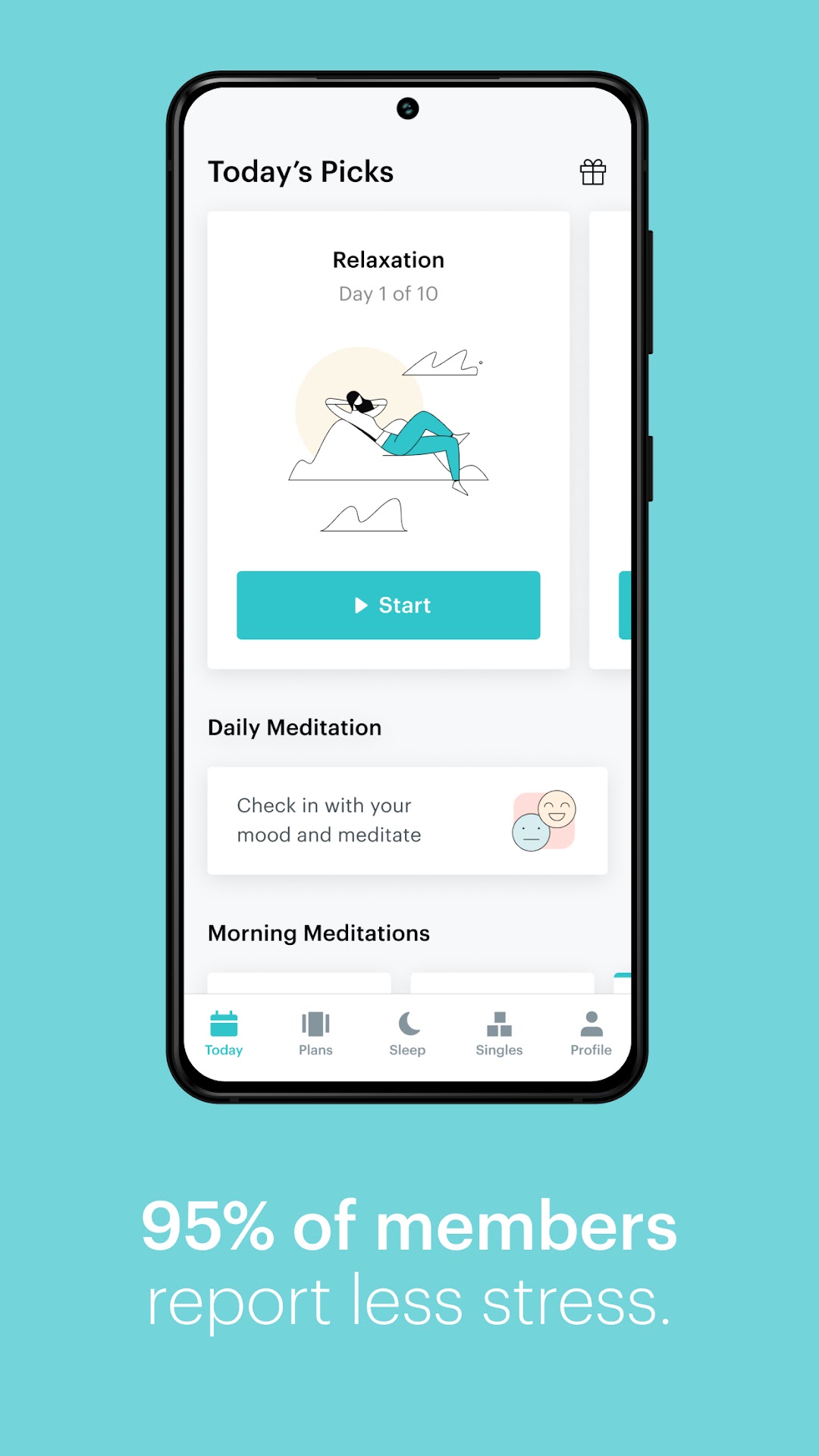
The interface is minimal in a way that feels considered rather than bare. Sessions load quickly, the audio quality is good and the rating screen after each session takes about five seconds. There is no friction between opening the app and meditating — a detail that sounds trivial but removes a real barrier at 6 a.m.
The home screen surfaces your next recommended session prominently. You can browse the library if you want to stray from the plan, but the design subtly pushes you back to the recommended path. Some users will appreciate the simplicity. Others will want more manual control.
After the first month, day-to-day feel depends heavily on whether you have made the practice a habit independent of the app. Balance does not have community features, streaks with social stakes or gamification that prod you to return. A gentle reminder notification is about the full extent of the re-engagement toolkit.
Method and credibility
Balance frames its approach around mindfulness without attaching to a specific clinical programme. The instructors are named and professional-sounding, but the app does not publish detailed credentials or cite peer-reviewed research the way Headspace does with its published studies.
The personalisation algorithm is the core intellectual claim, and it is proprietary. There is no independently published evidence on how well it works compared to a fixed curriculum. That keeps the method score at 3.9 out of 5 — above sceptical, below thoroughly evidenced.
This does not mean the sessions are low quality. They are well-produced and the content is grounded in recognisable mindfulness practice. The gap is between 'this sounds right' and 'this has been shown to work at scale.'
Pricing and what the free-year offer actually means
Balance has historically run a promotion offering the first year at no cost. Whether that offer is active when you read this varies — check the App Store or Play Store listing before assuming. Confirm current pricing there, as promotions come and go.
The standard plan runs at around $69.99 per year at the time of writing. That puts it level with Calm and Headspace — both of which offer broader content categories. You are paying for the personalisation engine. If that is the differentiator you value, the price is reasonable. If you mainly want a large library, Insight Timer's paid tier covers similar ground for less, and Headspace's breadth is wider at similar cost.
Cancellation runs through your App Store or Google Play subscription settings. If you signed up during a no-cost promotional year, note the renewal date carefully — the subscription charges automatically when the promotion expires.
Where Balance beats the competition — and where it loses
Against Calm, Balance wins on personalisation depth. Calm has a more polished brand and Sleep Stories are genuinely distinctive, but its sessions do not adapt to your feedback in the same way. If you find yourself skipping Calm sessions because they feel generic, Balance is a sensible switch.
Against Headspace, Balance is more adaptive but less evidenced. Headspace has published research on its programmes and the course structure is more explicitly scaffolded. Headspace also edges ahead on breadth — mood check-ins, some social features in certain markets and a more established track record. For beginners who want proven curriculum, Headspace is probably safer. For people who find rigid courses frustrating, Balance may suit better.
Against Liven, Balance loses on scope. Liven covers mood, journaling, courses, habit building and an AI companion alongside meditation. If you want meditation as part of a broader daily check-in practice, Liven gives you more in one place — albeit at a premium price and with heavier onboarding. Balance makes sense if you specifically want meditation done properly, without the rest of the stack.
Downsides worth knowing before you commit
The stickiness problem is real. Our score of 3 out of 5 reflects what we observed past the initial adaptive phase: without journaling, habits or social accountability, the app relies entirely on your intrinsic motivation. Plenty of apps have this problem; Balance's narrow focus makes it more pronounced.
There is no crisis support, no signposting to professional help, and no community. For everyday wellbeing practice this is fine. If you are going through a harder patch and want an app that at least acknowledges that, Balance is not the right tool.
The app also lacks data export. If you want to track your meditation history in another tool or take your data with you if you leave, that is not currently an option.
Privacy
Elevate Labs publishes a privacy policy covering the data collected through Balance. Onboarding collects goals, experience level and schedule preferences — the raw material for personalisation. How long those responses are stored and whether they are used for anything beyond in-app recommendations is worth checking directly in the current policy, particularly if you are privacy-conscious.
Balance integrates with Apple Health and Google Fit for session logging. That means meditation data can flow into your health ecosystem, which is generally convenient — but health platform data policies then apply as well. Read Elevate Labs' current policy before you start.
Our verdict on Balance
Balance is the strongest single-purpose meditation app for people who find standard catalogues generic. The personalisation is genuine, the interface stays out of the way, and offline support means you are not locked to a wifi connection. App store scores of around 4.8 on iOS and 4.6 on Android at the time of writing reflect a product that users actually enjoy using.
The honest caveats: it is narrow by design, the stickiness tapers off, and the price matches Calm and Headspace despite a smaller content scope. If you are undecided between Balance and Headspace, the question is whether you value adaptation or breadth more. For meditation specifically, and for users who will hold themselves accountable without gamification, Balance is a sound choice.
Maker: Elevate Labs · Platforms: iOS, Android · Approach: Self-guided, adaptive · Methods: mindfulness, meditation
Balance plans & pricing
Free tier: Has run a free-first-year promotion; otherwise a trial then subscription.
Trial: Free trial / promotional free year at times.
Prices approximate, as of June 2026 — verify on the App Store / Google Play. Most personalised plans and sessions require a subscription after the trial/promo.
Cancellation: Cancel through your app-store subscription; note the renewal date after any free year.
Feature checklist
- Mood trackingCheck-in
- Journaling—
- AI companion—
- Courses & lessonsYes
- MeditationsYes
- Soundscapes / focus musicYes
- Habit & routine builder—
- RemindersYes
- Quiz / assessmentYes
- Community—
- Live coaching—
- Crisis resources—
- Data export—
- Apple Health / Google FitYes
- Home-screen widgetsYes
- Offline useYes
Balance pros & cons
What's good
- Adaptive personalisation that actually changes what you hear, not just what gets highlighted
- Clean, calm interface with very little clutter or upsell noise inside the app
- Offline playback works without hunting through settings
- Health app integration for hands-off session logging
- App Store rating of about 4.8 and Google Play around 4.6 at the time of writing
- Has run a no-cost first-year promotion — worth checking if that offer is still live
What to weigh up
- Meditation only: no journaling, no habit builder, no AI companion
- Stickiness drops after the initial personalisation phase — the app does not pull you back strongly
- Annual plan at around $69.99 at the time of writing sits at Calm and Headspace price levels despite narrower scope
- No community or social layer if you want accountability
- Cancellation needs careful timing when coming off a promotional year
Support
Balance offers in-app help and standard app-store support. The depth of human support is not publicly detailed, so contact options are best confirmed in the app or on the developer's site before you need them.
Method & credibility
Balance describes its approach as mindfulness-based without attaching to a specific clinical programme such as MBSR or CBT. The personalisation mechanic is the product's core claim, not a third-party validated programme, so treat the evidence base as promising-but-unverified rather than clinically established.
Privacy & data
Balance is made by Elevate Labs, which publishes a privacy policy covering data collected during onboarding and sessions. As with any wellbeing app, it is worth reading the policy directly — particularly around what onboarding responses are stored and whether they are used for anything beyond personalisation.
Third-party ratings
- 4.8 / 5 on App Store — as of June 2026, verify
- 4.6 / 5 on Google Play — as of June 2026, verify
We report independent ratings with their source and date and never invent them. Figures here are approximate and pending verification before launch.
Our data: Balance
Two numbers we measure ourselves, on the same 1–5 scale for every app — the things most roundups never score (see all 20 on the compare page):
Balance FAQ
Is the Balance app really no-cost for a year?
Balance has offered a no-cost first year as a promotional deal, but availability varies. Check the current App Store or Google Play listing before downloading — the promotion may or may not be active at the time you read this. Confirm the renewal date when you sign up so there are no surprises.
How does Balance personalise sessions differently from other meditation apps?
After each session you rate it, and the app uses those ratings to adjust future content — altering length, pace and focus rather than just reordering a fixed playlist. The adaptation happens within Balance's library, so it is not generating entirely new audio, but the changes are real enough to notice across the first few weeks.
Does Balance work offline?
Yes. Sessions download in the background and play without an internet connection, which is one of its practical advantages over some competitors.
How does Balance compare to Calm?
Balance adapts more to your feedback; Calm has a broader library including Sleep Stories, a more recognisable brand and content that skews toward sleep and relaxation as well as meditation. Both cost around the same per year at the time of writing. Balance is the stronger pick if you find Calm sessions feel impersonal after a while.
Does Balance have journaling or habit tracking?
No. Balance is meditation-only. If you want those features alongside meditation, Liven covers all of them in one app, or you could pair Balance with a separate journaling or habit tool.
How do I cancel Balance?
Cancel through your App Store or Google Play subscription settings — not from inside the app. If you signed up during a no-cost promotional year, make a note of when it expires, as the app will renew automatically at the standard annual price unless you cancel beforehand.